
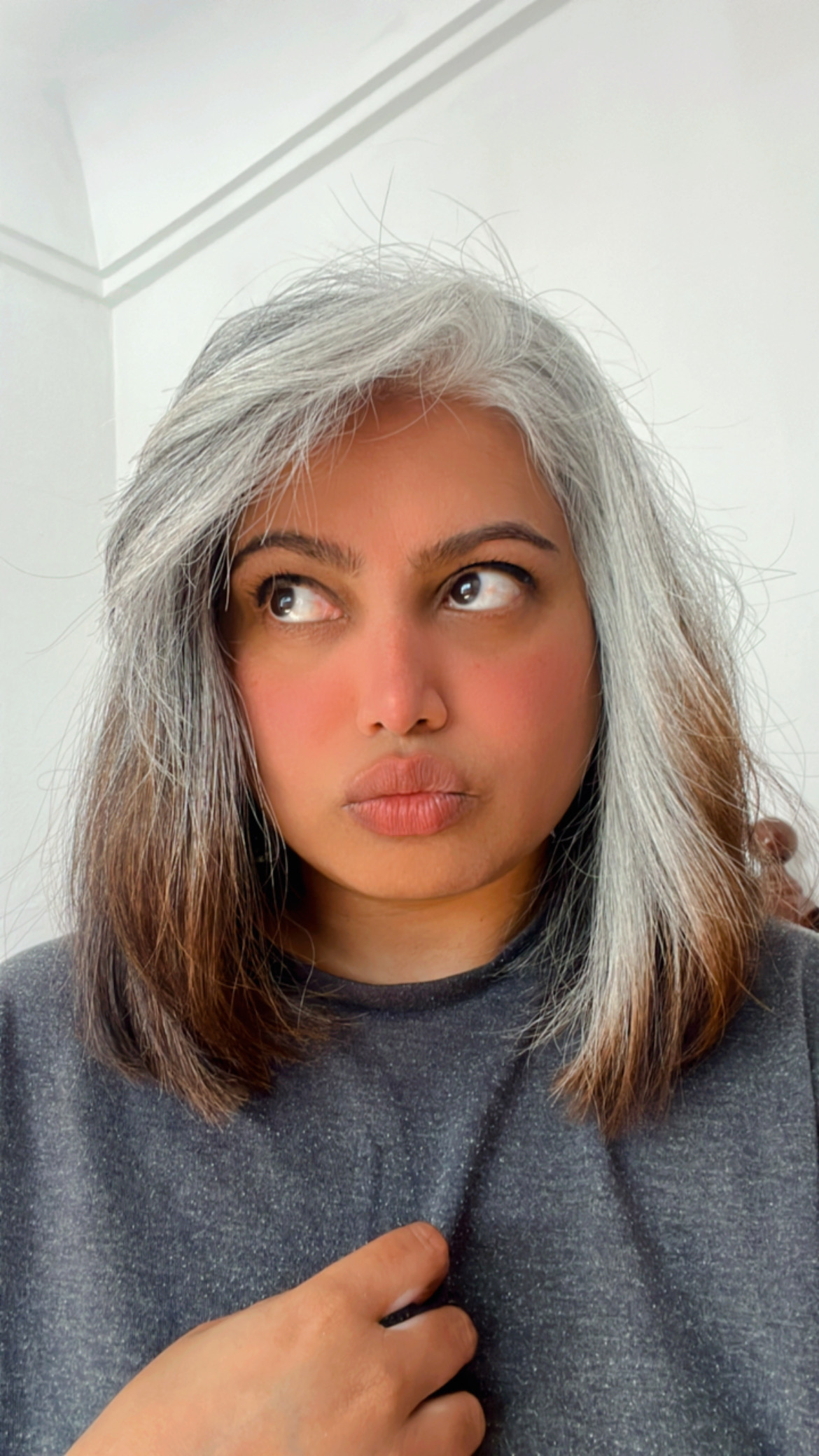
My Grey Hair Transition: Why I Chose to Go Grey And Why I’d Do It All Over Again
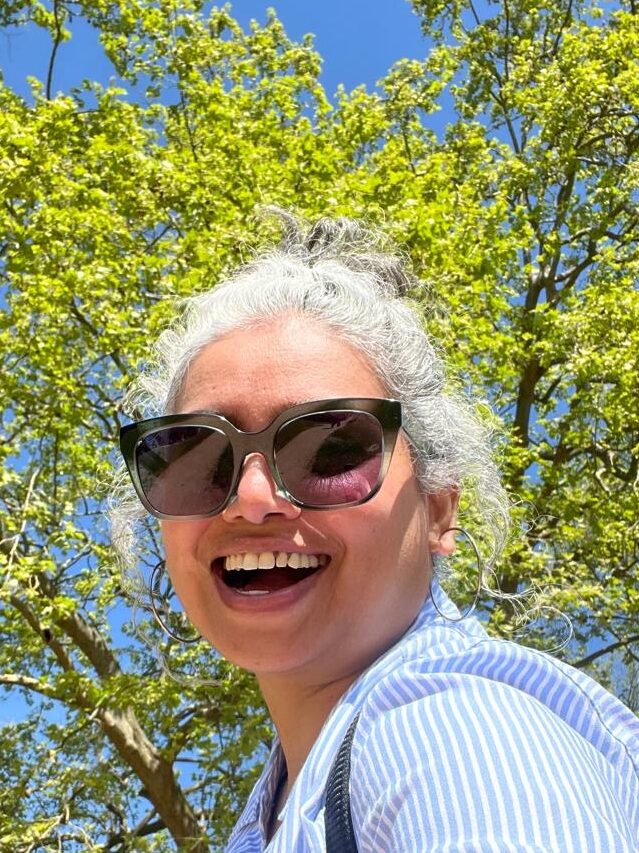
There is a moment and if you’ve been thinking about going grey, you probably know exactly what I’m talking about, where you look in the mirror and something shifts. Not in a dramatic, movie-moment kind of way. More quietly than that. More like a whisper that says: *how much longer are you going to keep doing this?
For me, that whisper started in 2020. My mom was oiling my hair the way she had done a hundred times before, gently, methodically, the way Indian mothers do it, with love worked into every stroke. And then she stopped. Her hands went still and she said, quietly, “Dee, this isn’t just grey. Something’s wrong here.”
She was right. What she was looking at was alopecia areata patches on my scalp where the hair had simply given up and stopped growing. I didn’t fully understand what that meant at the time. I didn’t want to. So I did what I had always done: I kept coloring my roots every single week, bald spots and all, pressing dye into scalp that was already struggling, telling myself it was fine.
It wasn’t fine. It was making everything worse. But I wasn’t ready to see that yet.
The Weight of Keeping Up
Here’s something nobody really talks about when it comes to hair colour: the exhaustion of maintenance.
I’m not just talking about the time it takes, though that’s real enough. I’m talking about the mental load of it. The knowing your roots are coming through and feeling like you need to do something about it. The planning around events, can’t have roots showing at that wedding, better book a touch-up before that work presentation. The way it becomes a kind of performance you don’t remember signing up for.
For years, I kept up with that performance. Dark /light brown, every week, no exceptions. It was just what I did. It was just who I was.
But underneath it, my body was trying to tell me something I wasn’t listening to.
When Everything Collided
The alopecia was the first crack. My bald spots weren’t shrinking, they were spreading. Every time I sat down with a box of dye, I was covering damage instead of dealing with it. The chemicals weren’t helping my scalp; they were agitating it. But it felt impossible to stop, because stopping meant letting people see what was actually happening.
Then we moved to Lisbon.
I love this city deeply. But the move brought its own challenges I hadn’t anticipated. The water was different, harder, mineral-heavy in a way my hair wasn’t used to. The climate was different. And finding the exact same products I’d relied on for years? Much harder than I’d expected. What used to be a manageable weekly routine became a battle against a dozen variables I couldn’t control.
And underneath all of it, quietly and persistently, was my adenomyosis.
If you live with chronic pain, you already understand this without me needing to explain it. Your body is already asking so much of you just to get through a normal day. Adding a weekly ritual of chemical processing, the smell, the time, the sitting still while your scalp absorbed something that wasn’t doing it any good, while exhausted and in pain started to feel less like self-care and more like self-punishment.
I kept thinking: I am doing all of this to look a certain way for other people. And I am so, so tired.

The day I finally stopped wasn’t dramatic. It wasn’t a big declaration. I just didn’t book the next appointment. And then I didn’t book the one after that. And the roots came through, and I let them.
I went all in — blind, unprepared, without researching what a grey transition was supposed to look like or whether my hair could “carry” it or what I’d find on the other side. I was simply too tired to keep hiding. And sometimes, that’s enough of a reason.
The Awkward In-Between Nobody Warns You About
Can I be honest with you about something? The first few weeks were hard.
I had been dark brown for so long that seeing my real hair come through felt like meeting a stranger in the mirror. I stayed home more than usual during that stretch, not out of shame exactly, but out of something adjacent to it. A kind of rawness that comes with letting something real show after years of covering it.
I was also carrying the bald spots. The actual, visible patches from the alopecia that my dark dye had been hiding. Letting my hair go grey meant letting those be seen too. And that was harder than I expected.
But something shifted. I can’t tell you exactly when or why, but somewhere in those early weeks, I stopped bracing for the exposure and started sitting with it. And then… surprisingly, genuinely.. I started to feel something I hadn’t felt in years.
Relief.
The roots I’d been anxious about a week before became the thing I felt most proud of. I stopped hunching my shoulders and started lifting my chin. The same hair I’d been hiding became the thing I wanted people to see.
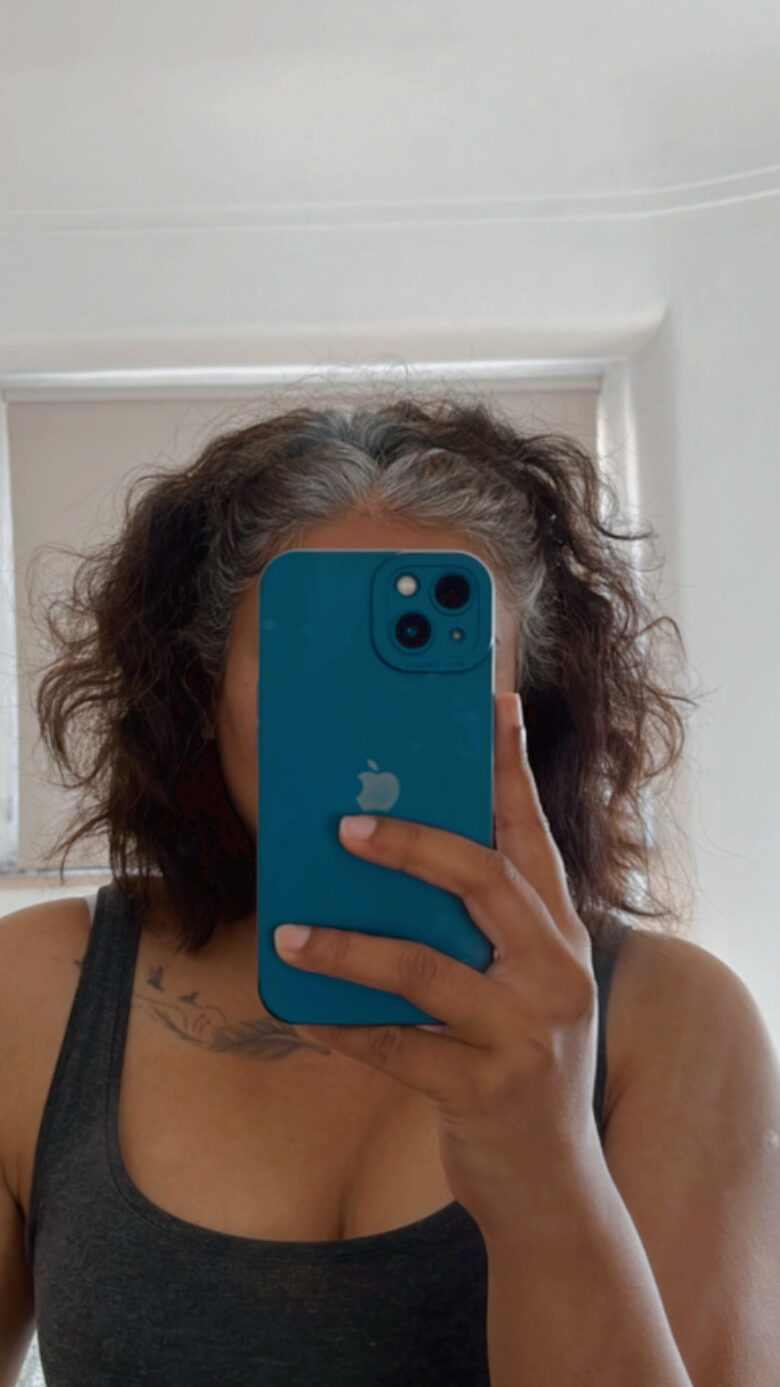
Not everyone was ready for that. People told me, some gently, some not, that I was starting to look old. That it aged me. That I should color it back before it was too late, as if there were some window closing that I hadn’t noticed. A few people said it with love, genuinely worried for me. Others said it with something sharper underneath. I heard all of it.
And I kept going anyway.
Because here is what I had found: something true. And I wasn’t willing to trade it back for anyone else’s comfort.
What Nobody Told Me About Grey Hair Transition
I expected the transition to cost me something. I thought I would look older and feel less confident and spend months wishing I could undo it. That’s the story we’re told, isn’t it? That grey is something that happens *to* you, something to be managed and minimized.
What I didn’t expect was what it gave me back.
Time. Every week I used to spend on my roots is mine again. That might sound small, but add it up over months and years and it is a significant piece of your life returned to you.
Money. The cost of weekly maintenance, products, appointments, treatments to fix the damage the maintenance caused, was more than I’d let myself think about. Gone.
Energy. This one surprised me the most. I hadn’t realised how much mental space the performance of it was taking up until it wasn’t there anymore. The relief of not planning around my roots. The freedom of waking up and not having the first thought be about when I need to schedule the next touch-up.
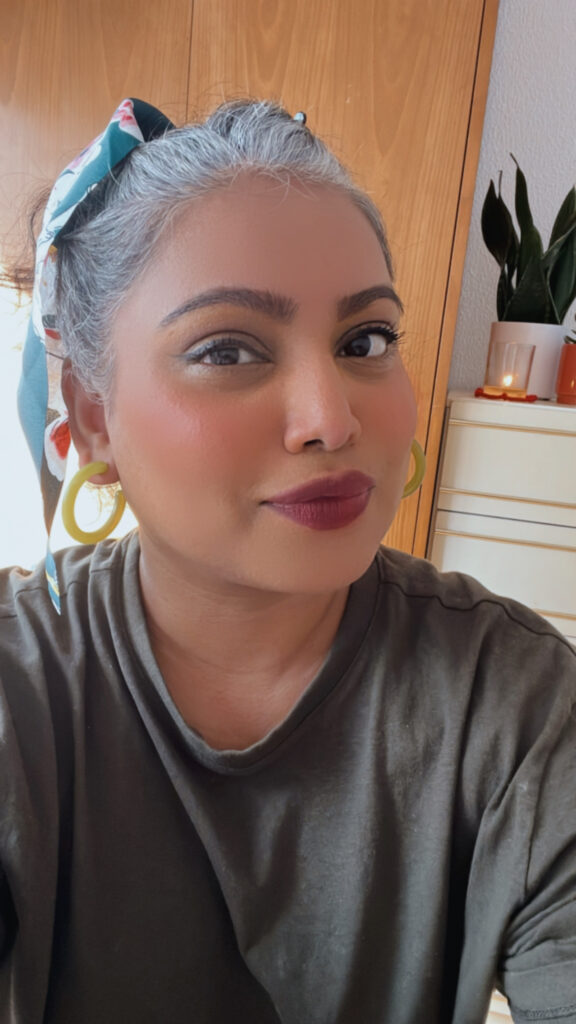
And something harder to name than any of those. A sense of being in my own corner for the first time in a very long time.
My grey hair is not a trend I’m following. It is not a statement I’m making for social media. It is not a brave choice or a bold move. It is simply me, deciding to stop fighting myself.
Where I Am Now
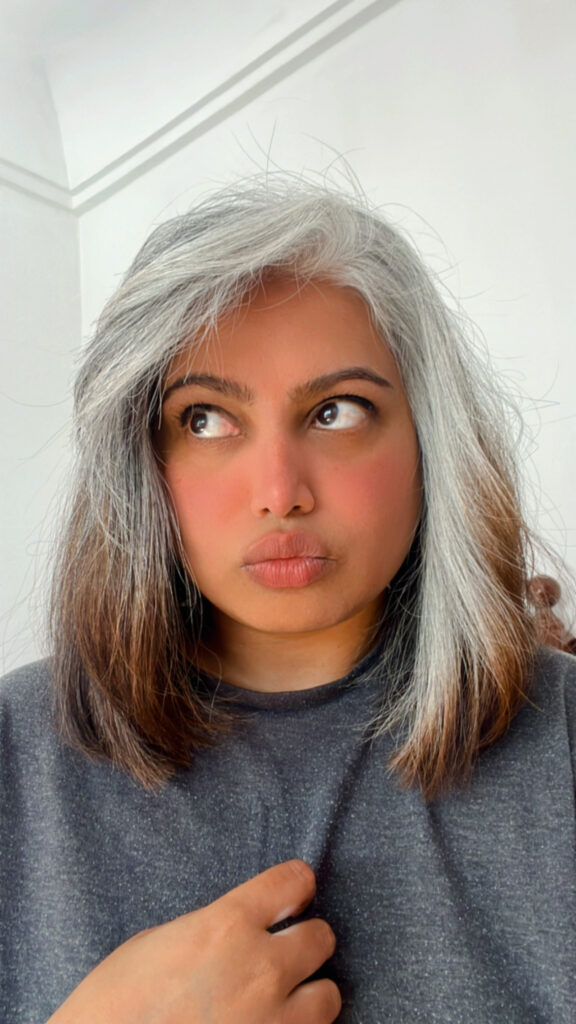
I’m in my second year of being fully grey, and I don’t regret a single day of it.
The bald spots that started this whole journey are part of my story now, not something I hide, not something I speak about in a lowered voice. They are the beginning of all of this. They are the crack in the wall that let the light through.
The compliments come daily now. And the thing that still makes me smile every time, some of the warmest ones come from the exact same people who once told me to dye it back. People change their minds when they see you standing in your own truth with enough confidence. Sometimes your certainty becomes permission for other people to reconsider their own assumptions.

My hair is silver. My roots are real. My scalp is healthier than it has been in years. And the woman in the mirror? I finally recognise her.
To the Woman Reading This Who Is Still on the Fence
I see you. I know exactly where you’re standing.
You’re tired of the maintenance but you’re scared of what comes after. You’ve done the mental math a hundred times, will I suit it, will it age me, what will people say, am I ready and you still don’t have a clear answer. Maybe you’ve been putting it off for months. Maybe for years. Maybe you’ve let your roots grow out twice and coloured them back both times because it felt safer.
I’m not going to tell you that going grey is easy, because it isn’t always. The transition can be awkward. People will have opinions. There will be days when you wonder if you made the right call.
But I will tell you this: the version of you on the other side of that decision, the one who stopped fighting her own hair, who let her real self come through, who learned to stand in the mirror without flinching, she is worth the discomfort of getting there.
You don’t need to have it all figured out before you start. You don’t need to know what you’ll look like on the other side. You don’t need permission from anyone, not your partner, not your mother, not the women in your office, not the voice in your own head that’s been running the performance all these years.
You only need to decide that you are done hiding.
I went grey in the middle of alopecia, a cross-continental move, chronic illness, and more uncertainty than I could see the end of. I didn’t do it gracefully. I didn’t do it with a plan. I did it because I was tired, and because somewhere underneath the tiredness, I believed I deserved to stop.
You deserve that too.
Your silver is not a sign of giving up. It is a sign of arriving.
And whenever you’re ready, I’ll be right here.
With love and silver solidarity,
Dee | mysilverbliss
If this resonated with you, I’d love for you to share it with another woman who might need to read it today. And if you’re just starting your own grey journey, I’m sharing the practical side of this too: what actually helped my hair, what products I use, and how I care for grey hair that’s also dealing with alopecia.
Coming up next on mysilverbliss:
The Grey Hair Products That Actually Worked For Me | My Honest Review After Two Years
Follow me on Pinterest and YouTube so you never miss a post, links below!
Youtube – https://www.youtube.com/@Mysilverbliss/videos
Pinterest – https://pt.pinterest.com/mysilverbliss/