Best Grey Hair Scalp Routine for Alopecia and Thinning Hair
Grey Hair Scalp Routine: for Alopecia and Thinning Hair

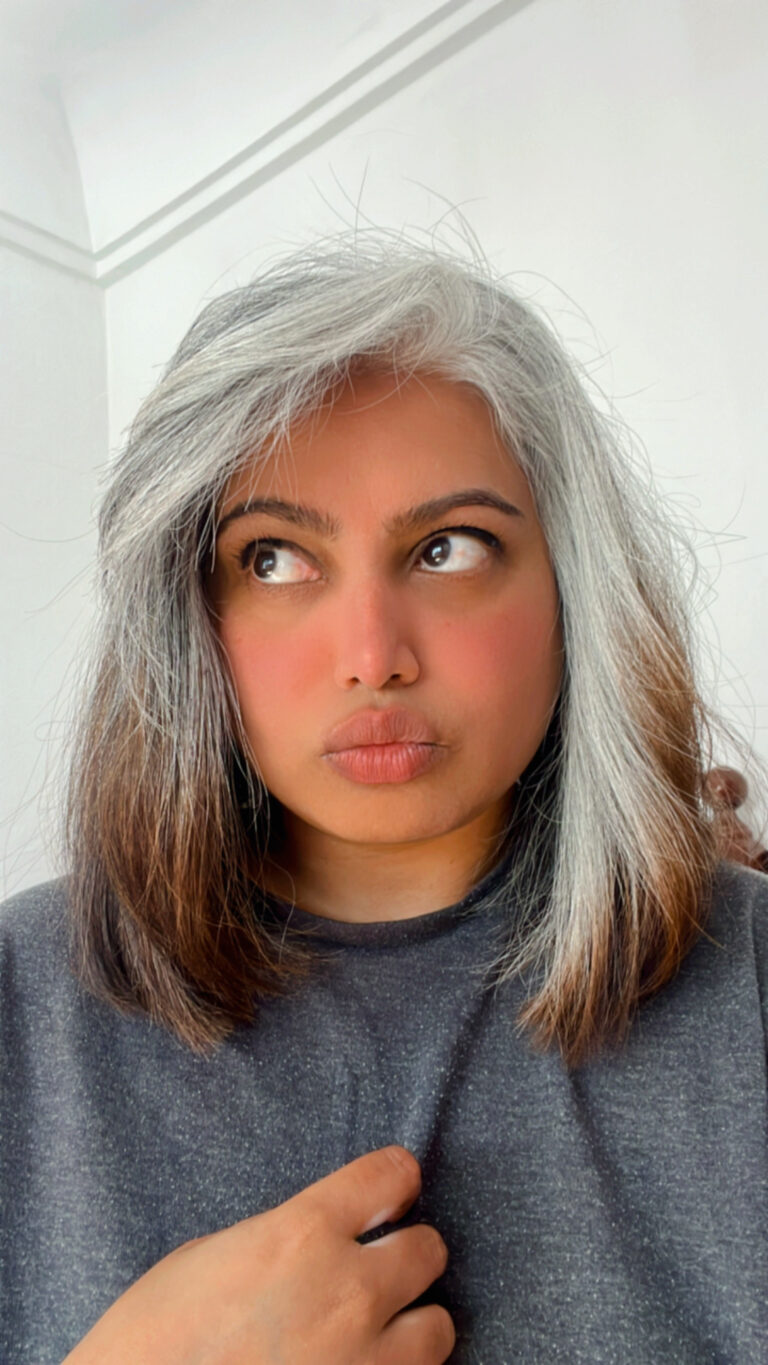
I didn’t stop colouring my hair because I wanted to embrace some natural beauty movement. I stopped because my scalp couldn’t take it anymore. I have alopecia, and thinning hair and every time I coloured my hair, my scalp got worse. It was inflamed. It couldn’t breathe. The chemicals that were supposed to make me look better were actively working against my own skin, and I didn’t realise how much damage was happening until I finally stopped and let it heal. I have shared my story about why I actually chose to go grey.
That decision changed how I think about hair completely. It’s not about colour, or covering grey, or hiding what’s underneath. It’s about what’s happening on your scalp ( alopecia and adenomyosis), because everything else grows from there.
Disclaimer: This post contains affiliate links. If you click through and make a purchase, I may receive a small commission at no additional cost to you. Thank you for supporting my blog!
Grey Hair Isn’t Just Hair Without Colour
Here’s something nobody told me before I went through this. Grey hair behaves differently. It’s coarser. Mine is curly on top of that, so the texture change hit twice as hard. Everyone’s hair is different, but for a lot of us, grey strands need far more moisture than we’re used to giving them. What worked on your hair for years suddenly stops working, and it’s not because you’re doing anything wrong. Your hair actually changed.
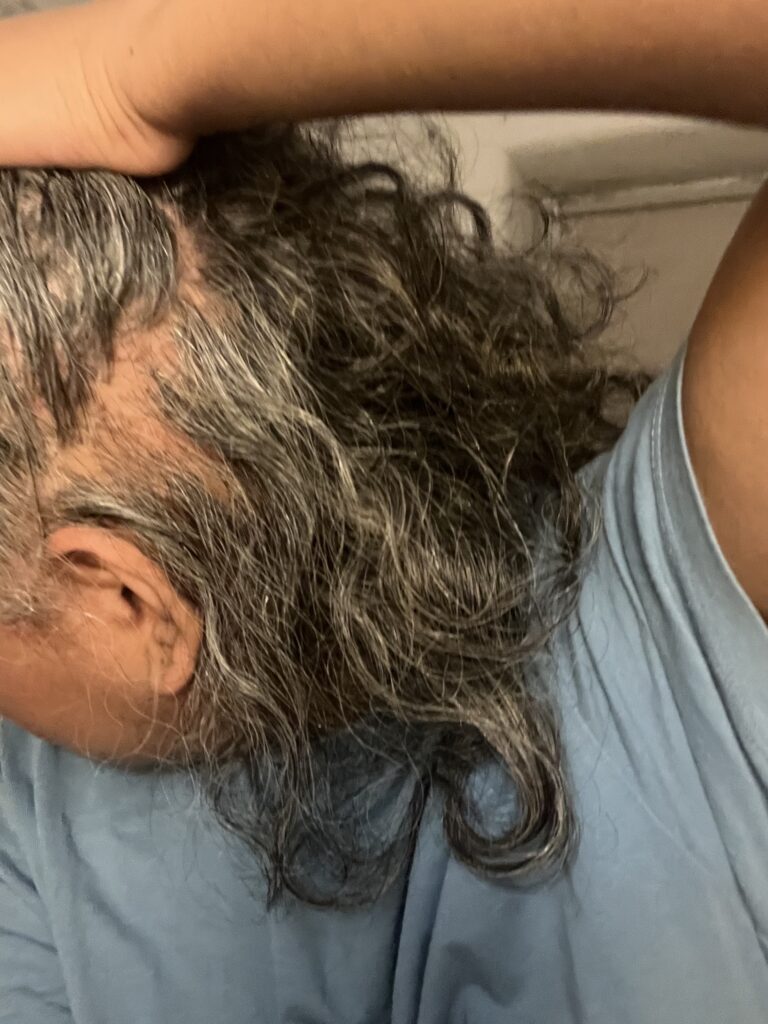
I didn’t understand that at first. I kept using the same normal shampoos I always had, and instead of helping, they made my hair even more coarse and difficult to manage. I want to be clear here, I’m not saying drugstore products are bad. They’re not. But not everything suits everyone, and you genuinely don’t know what works for your hair until you’ve used something consistently for a while. Give a product real time before deciding it’s not for you, and don’t be afraid to move on if it isn’t.
These shampoos that finally worked with my coarser, curly grey hair. This helped me with my alopecia and thinning hair.
L’Oréal Professionnel Paris
L’Oréal Professionnel Absolut Repair Molecular Sulphate Free Shampoo, For Extremely Damaged Hair, Molecular Peptides Bond Repair, Restore Strength & Elasticity
L’Oréal Paris Shampoo For Dehydrated Hair Shampoo For Dehydrated Hair: This moisture-boosting formula helps fight the first sign of damage by tackling dry and lifeless hair
L’Oreal Paris Shampoo For Hair Growth And Anti Hair Loss Growth Booster With Aminexil And Niacinamide, Prevents Hair Thinning
Why I Stopped Focusing on My Hair and Started Focusing on My Scalp
This is the part I really want people to sit with. Most of us are taught to think about our hair, the ends, the shine, the length. But your scalp is the actual foundation. If it’s inflamed, dry, or unhealthy, nothing you put on your strands is going to fix the real problem. Once I shifted my attention to caring for my scalp first, everything else started falling into place.
L’Oreal Paris Elvive Growth Booster Scalp Serum Anti Hair Loss Scalp Treatment, with Aminexil, Nianimacide and Ginger Extract, Reduces Hair Loss.
The Ordinary Multi-Peptide Serum Serum for Hair Density and Scalp Support, Peptide-Powered Formula
One thing I learned the hard way is that oil only works when it’s going onto a clean scalp specially with alopecia and hair thinning. I apply mine once or twice a week, never on top of buildup or product residue, because oil sitting on a dirty scalp just clogs everything up instead of actually nourishing it.
While the oil is on, I take a few minutes to massage my scalp properly. This became one of my favourite parts of the whole routine, and it’s not just relaxing, it actually does something. We hold so much tension in our scalp without even realising it, especially around the hairline and the base of the skull. Massaging that area regularly helps release that tension, improves circulation, and gets more blood flow to the follicles, which supports healthier growth over time. It’s a small habit but it makes a real difference, both for your scalp and honestly for your nervous system too.
There are the oils I mix and use twice a week. If you have alopecia or hair thinning. But before you take any step it is always better to check with your family doctor to see what issues you have internally first.
Deve Herbes Pure Rosehip Seed Oil
Deve Herbes Rosemary Essential Oil

The Internal Side Nobody Talks About
Taking care of your scalp doesn’t stop at what you put on it. What’s happening inside your body shows up on your scalp too, and this part made a real difference for me.
When I quit my job, one of the first things that changed was my sleep. I started actually getting a full 8 hours a night. I know that’s not realistic for every woman, especially if you’re working full time, but I noticed the difference it made, and it’s worth mentioning because rest genuinely affects how your scalp and hair recover.
I also use DHT blockers. DHT is a hormone connected to hair follicles shrinking over time, and with alopecia specifically, that matters. Blocking some of that hormone from reaching the follicle has helped support what I have left and slow things down.
Tata 1mg DHT Blocker with Biotin Advanced Tablet
Water intake was another simple but overlooked piece. I started keeping a sipper with me everywhere so I never miss drinking enough throughout the day. It sounds small, but staying properly hydrated shows up in your scalp and skin more than people expect.
On the supplement side, I take iron and magnesium tablets, along with cod liver oil and vitamin D3. These aren’t miracle fixes, but they support the body in a way that eventually reflects in your hair and scalp health too.
You can check with your family doctor about what you exactly need.
If You’re Just Starting This Journey
If your scalp is struggling right now, from alopecia, inflammation, or just years of damage from colouring and heat, I want you to know it’s not permanent. It takes time, and it takes patience, and it takes actually listening to what your scalp is asking for instead of just chasing what your hair looks like on the surface. Once I stopped fighting that and started supporting it instead, everything shifted, not overnight, but steadily.
This is still my routine today, adjusted as I learn more about what my scalp needs. If you’re going through something similar, I’d love for you to follow along on Instagram [@mysilverbliss], where I share the real, ongoing version of this.
And if journaling helps you process changes like this the way it’s helped me, I put together a guided journal called *Finding Your Silver Bliss*. The theory is to love your hair no matter what.
Save this post for later, or share it with someone going through the same thing.
Disclaimer: This post contains affiliate links. If you click through and make a purchase, I may receive a small commission at no additional cost to you. Thank you for supporting my blog!